







YAGAJI STAY 2024
原風景を継承し、
文化を未来へ手渡す建築
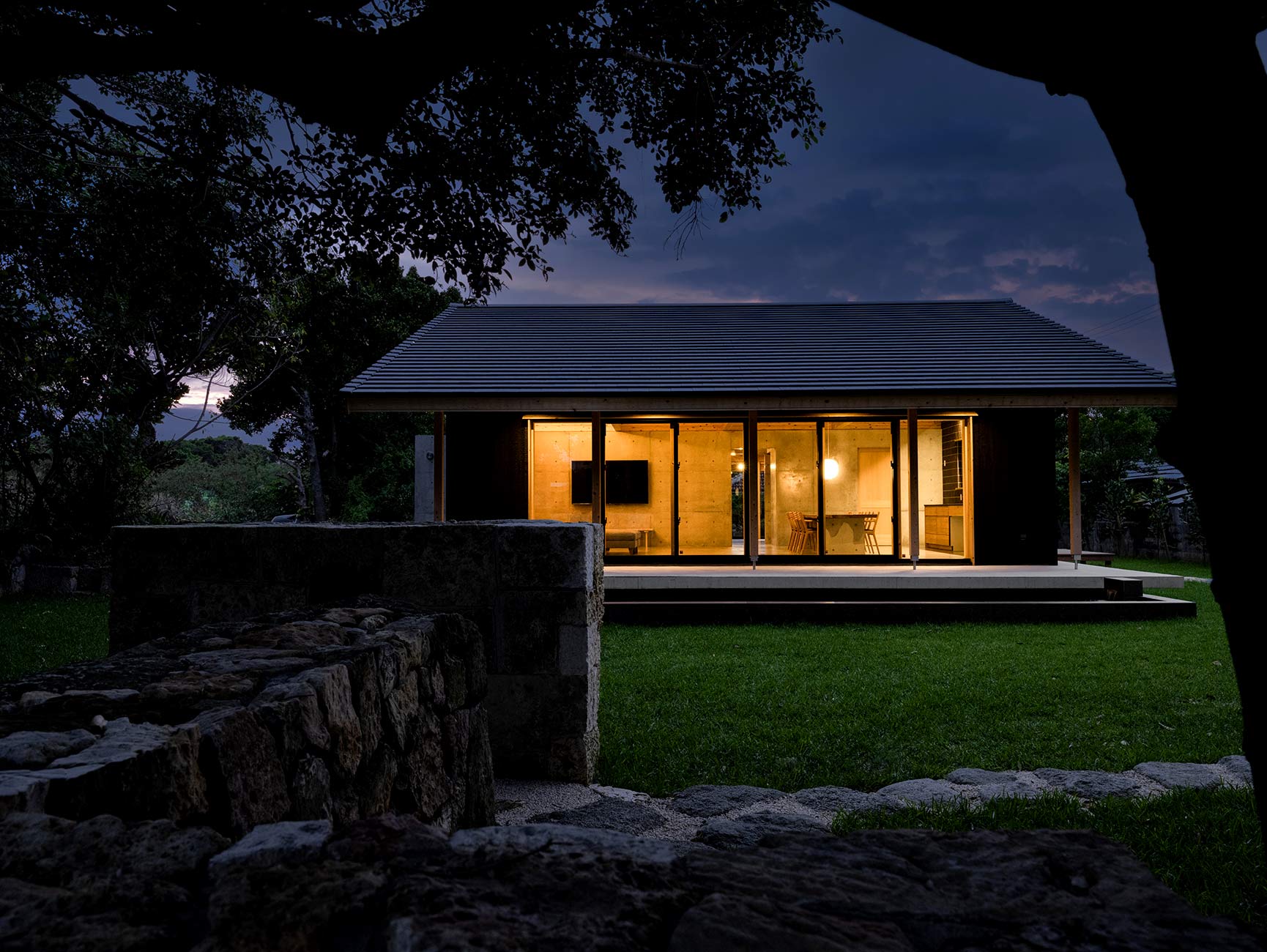
計画地は、樹齢百年を超えるフクギの木々に包まれた土地。
そこには、築およそ百三十年の沖縄伝統古民家が、長い時間を静かに刻みながら佇んでいました。再生の可能性を慎重に探りましたが、経年劣化は想像以上に進み、建て替えという選択に至ります。しかしそれは、風景を更新することではなく、佇まいと記憶を、次の時代へ受け渡すための建て替えでもありました。
施主である企業が望まれたのは、単なる保養施設や宿泊機能にとどまらず、沖縄の原風景と文化を静かに伝え、次世代へと手渡していく「開かれた民家建築」。この場所が、土地の記憶を宿したまま、新しい役割を担うことが求められました。
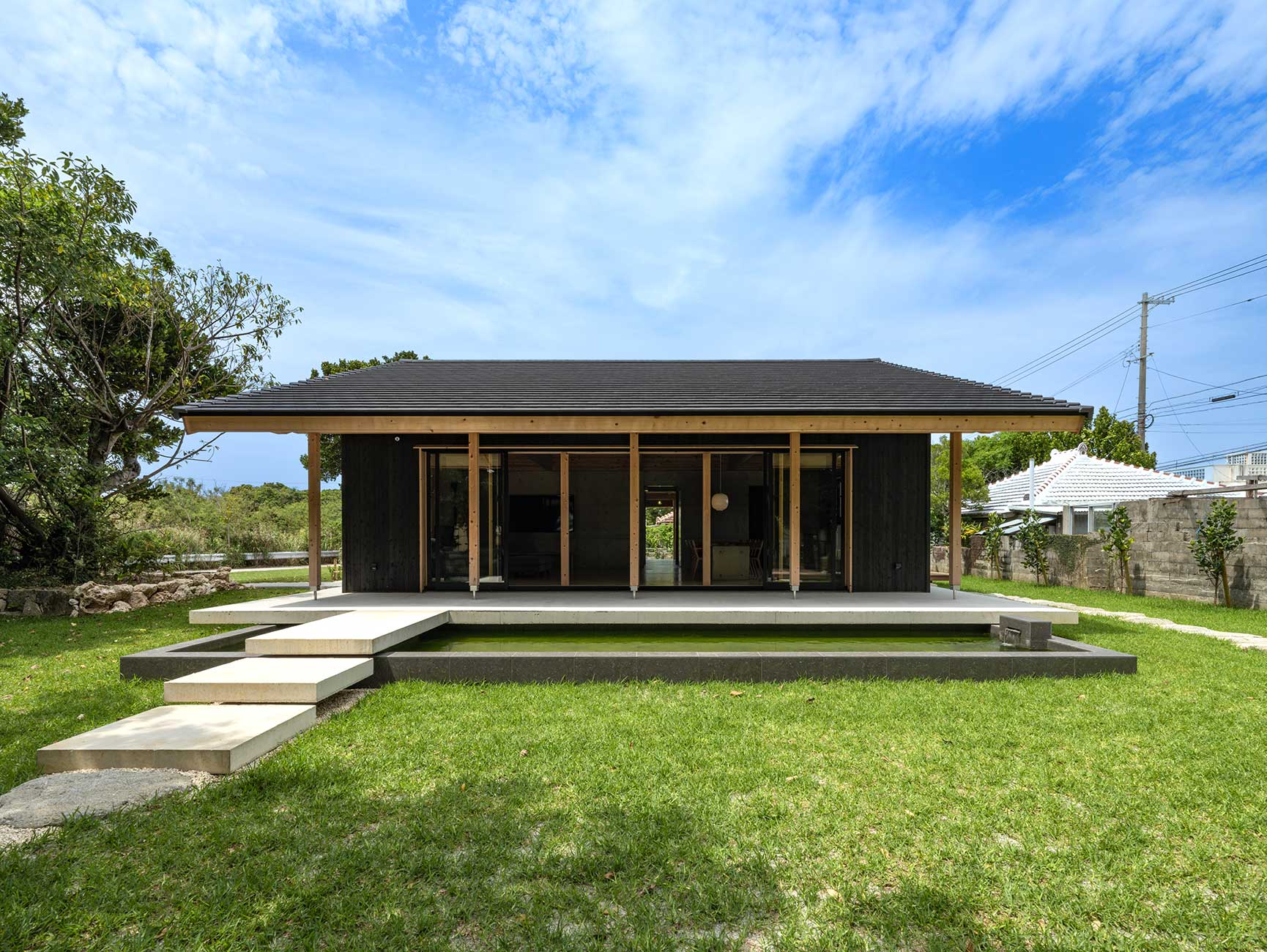
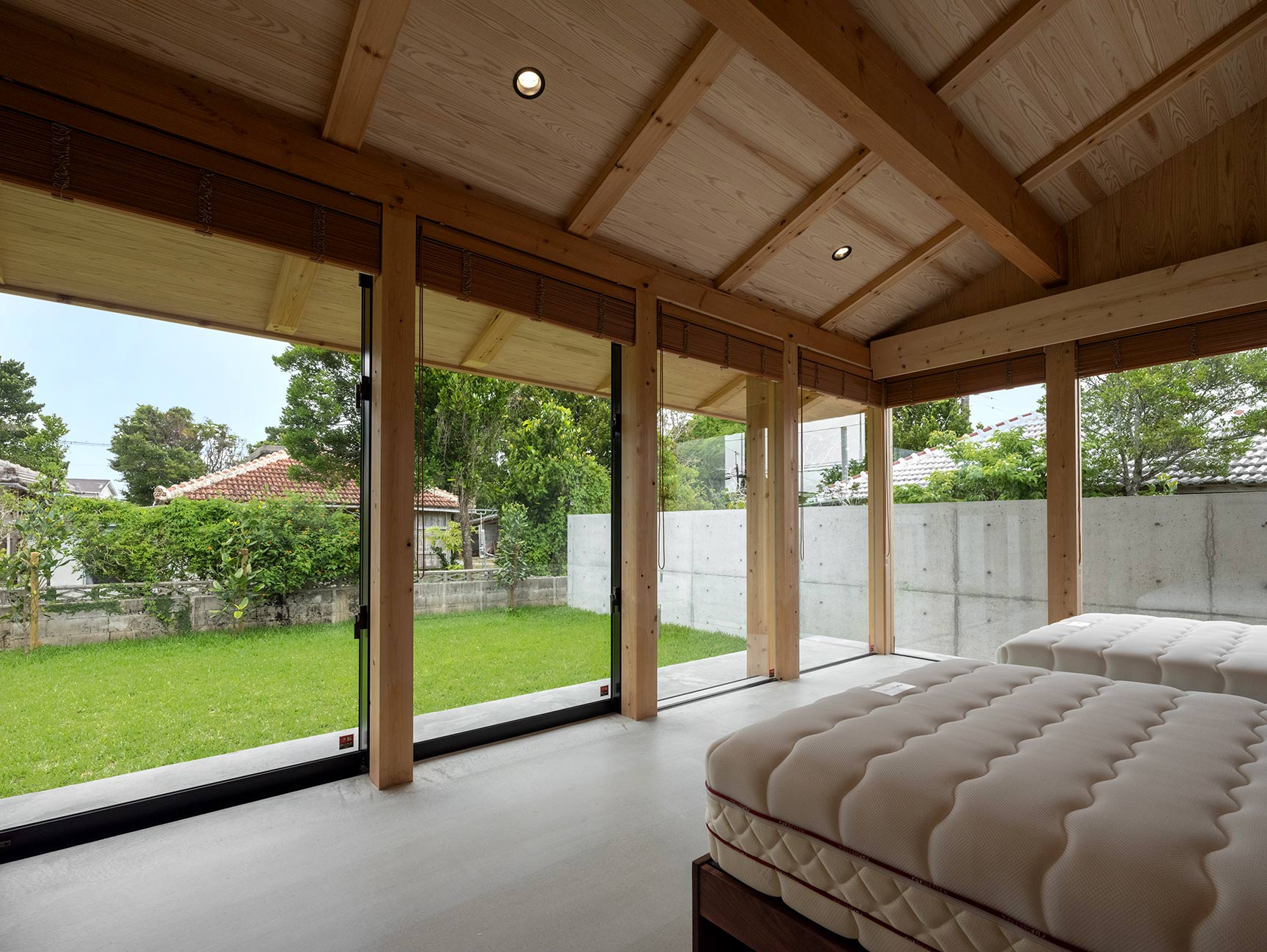
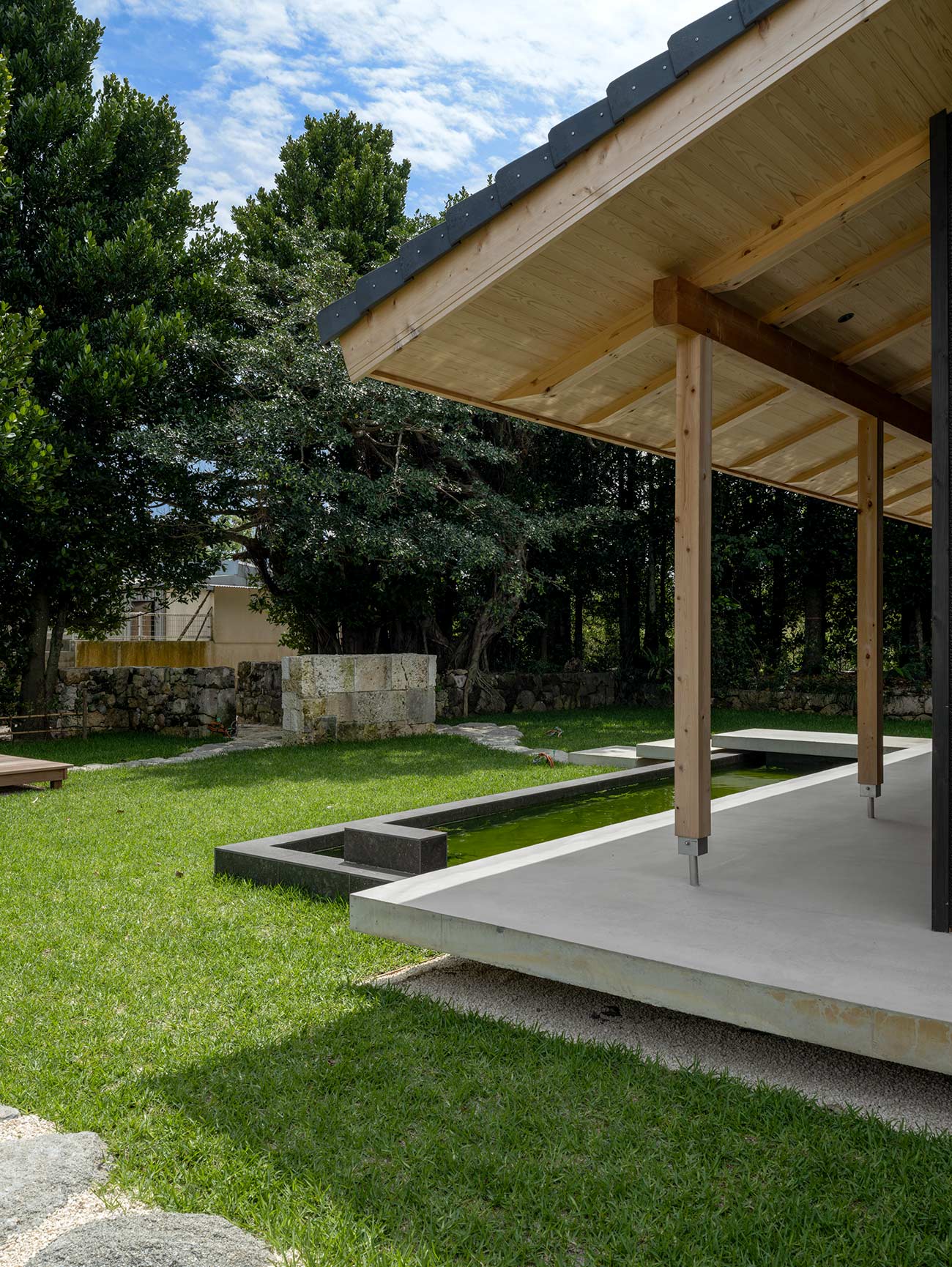
沖縄伝統古民家の象徴である、深い庇(雨端)と開放的な開口部。それらは本来、風と影を受け止め、自然とともに暮らすための知恵ですが、同時に、現行の木造構造規定においては、耐力壁の不足や台風時の吹き上げに対して大きな課題を抱えています。本計画では、構造解析を行った上で、在来の伝統木組み(仕口・継手)を基本としながら、鉄骨の筋交いや梁を部分的に補強材として組み合わせる構造を採用しました。 伝統を形としてなぞるのではなく、思想を継承し、構造として更新するための選択です。
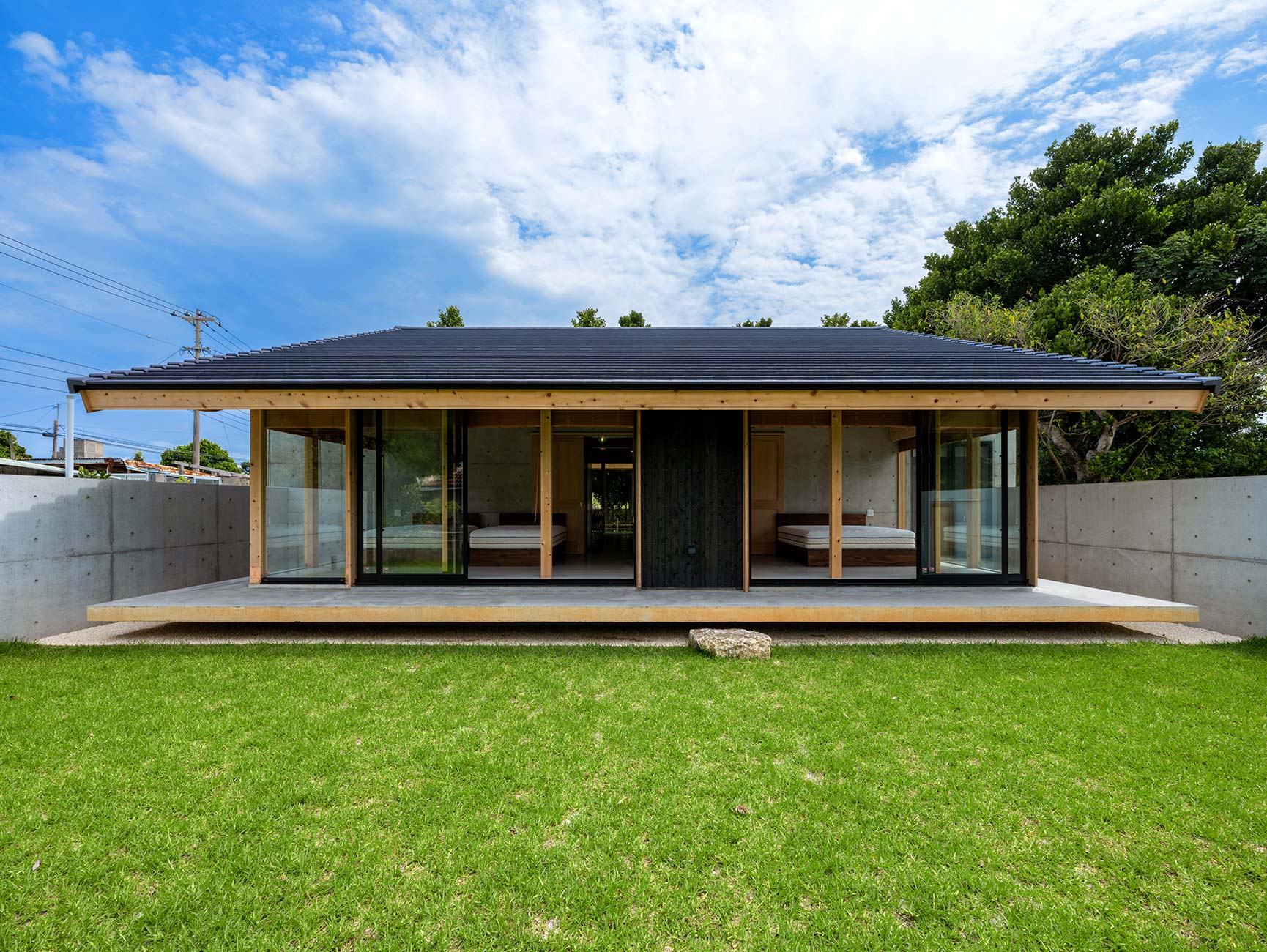
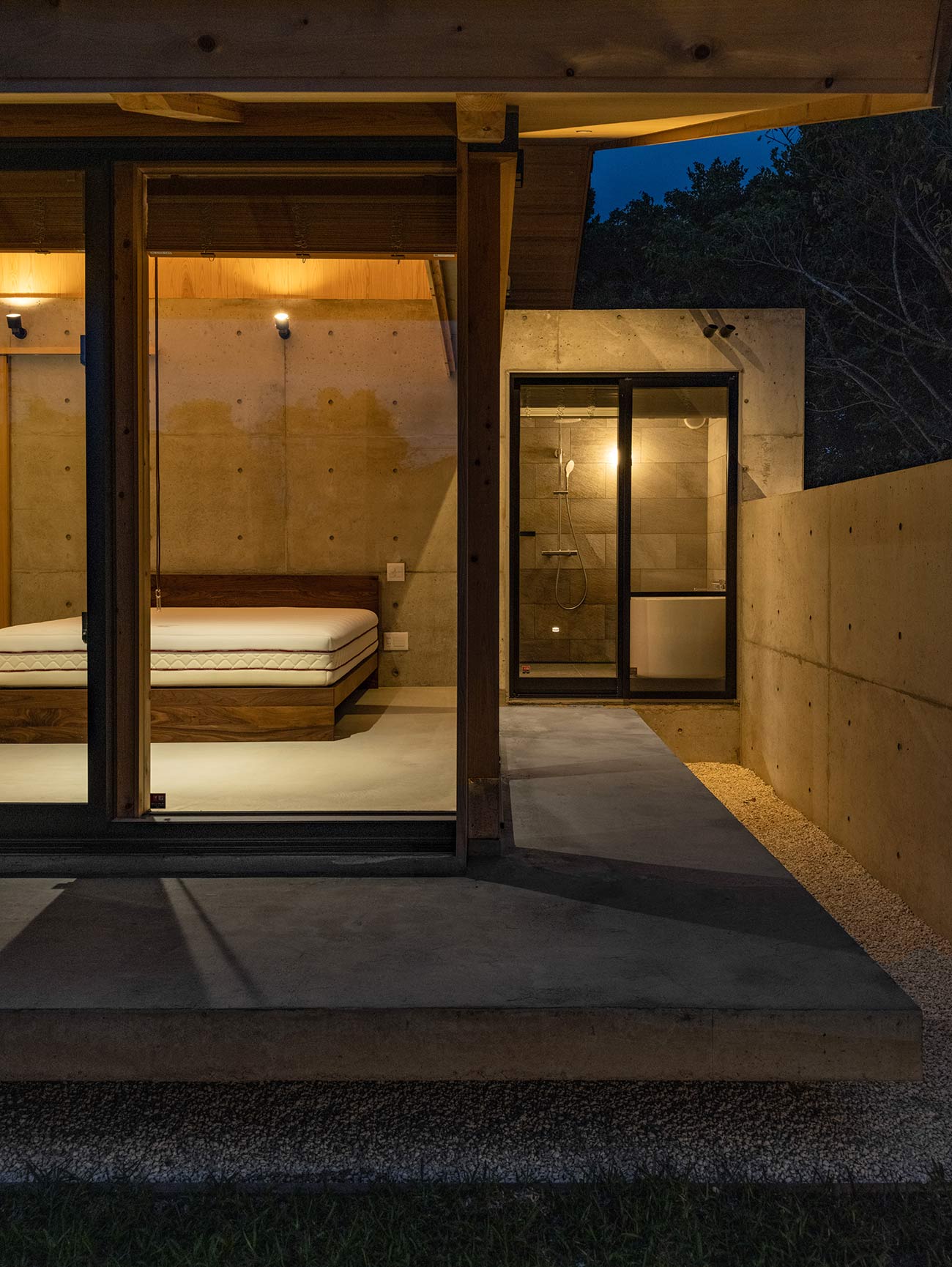
平面構成は、沖縄古民家における「表座・裏座」の関係性を踏襲。湿気対策を要する水回りはRCボックスに包み、表座と裏座のあいだに配置することで、木造空間の呼吸を妨げない構成としています。また、浸水災害への備えとして、基礎は石場建てではなく、高床までをRC造としました。
当初予定していたセメント瓦や、焼杉板型枠の再利用は、設計期間中に重なったコロナ禍により、やむなく変更を余儀なくされました。 県内最後のセメント瓦職人の引退、外壁材の保管環境の問題。それらは、失われつつある技術と時間の重さを、改めて私たちに突きつける出来事でもありました。
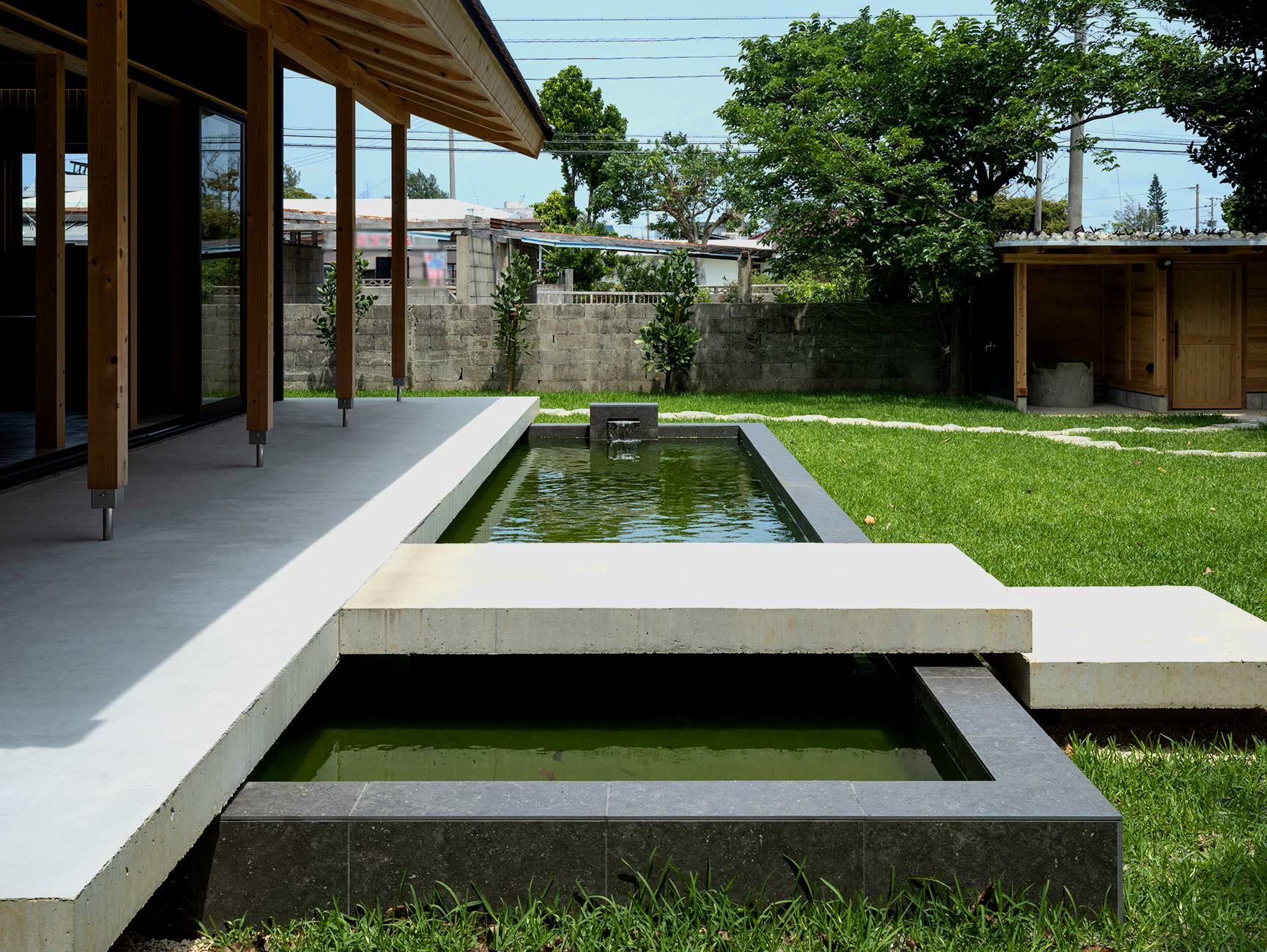
古井戸から引き込んだ水を湛える水盤は、ビオトープとしてこの土地に再び循環をもたらし、フクギの大樹、深い雨端、開放的な開口部とともに、新しい木造民家の風景を静かにかたちづくっています。悠久の歴史に想いを馳せながら、人が集い、語らい、文化が行き交う場として。原風景を守りながら、未来へとひらかれていく建築を目指しています。
An architecture that inherits
the original landscape and quietly hands culture to the future.
The planned site is surrounded by Fukugi trees that are over one hundred years old.
There, a traditional Okinawan folk house,built approximately 130 years ago,
stood quietly, marking the slow passage of time. We carefully explored the possibility of restoration,
but the deterioration had progressed further than anticipated,
and we ultimately chose to rebuild.
However, this was not an act of renewing the landscape, but rather a rebuilding to hand down its presence and memories to the next generation.
What the client company sought was not merely a resort or accommodation facility, but an “open folk house” that would quietly convey Okinawa’s original landscape and culture and pass them on to future generations. This place was called upon to assume a new role while continuing to carry the memories embedded in the land.
The deep eaves (amaba) and expansive openings, symbols of traditional Okinawan houses, are originally forms of wisdom that receive wind and shadow and allow people to live in harmony with nature. At the same time, under current wooden construction regulations, they present major challenges, such as insufficient shear walls and vulnerability to uplift during typhoons.
In this project, after conducting structural analysis, we adopted a hybrid structural system that combines traditional timber joinery with partially introduced steel braces and beams as reinforcement. This choice was made not to trace tradition merely in form, but to inherit its philosophy and renew it as structure.
The floor plan follows the traditional Okinawan relationship between the “front room” and “back room.” Wet areas requiring moisture control are enclosed within reinforced-concrete boxes and placed between these two spaces, so as not to disturb the breathing of the wooden architecture.
In preparation for flood damage, the foundation was not constructed in the traditional stone-base method, but formed in reinforced concrete up to the raised floor level.
The original plan to reuse cement roof tiles and charred cedar board formwork was unavoidably altered due to the COVID-19 pandemic that coincided with the design period. The retirement of the last cement-tile craftsman in Okinawa, and difficulties in storing exterior wall materials— these events once again confronted us with the weight of time and the fragility of disappearing craftsmanship.
The water basin filled from an old well serves as a biotope that restores circulation to this land once more. Together with the towering Fukugi trees, deep eaves, and expansive openings, it quietly shapes the landscape of this new wooden folk house.
While reflecting on the flow of eternal history, we aim to create an architecture that becomes a place where people gather, converse, and cultures quietly intersect—protecting the original landscape while opening gently toward the future.
Project Credits - Architecture: Ikuyo Nakama / Woodwork & Interior Design: Rakkyo Co., Ltd. Nanami Hayasaki / Landscape & Exterior Design: ESC Co., Ltd. Roshan Pradhan / Construction: Rakkyo Co., Ltd. Gushichan Construction Co., Ltd. Katsu Electric Works Co., Ltd. Meisei Electric Works LLC Motobu Landscaping Co., Ltd. / Photography: Naoyuki Asato
YAGAJI STAY 2024
Cultural Architecture
原風景を継承し、
未来へ手渡す建築
計画地は、樹齢百年を超えるフクギの木々に包まれた土地。
そこには、築およそ百三十年の沖縄伝統古民家が、長い時間を静かに刻みながら佇んでいました。再生の可能性を慎重に探りましたが、経年劣化は想像以上に進み、建て替えという選択に至ります。しかしそれは、風景を更新することではなく、佇まいと記憶を、次の時代へ受け渡すための建て替えでもありました。
An architecture that inherits the original landscape and quietly hands culture to the future.
The planned site is surrounded by Fukugi trees that are over one hundred years old.
There, a traditional Okinawan folk house,built approximately 130 years ago,
stood quietly, marking the slow passage of time.
We carefully explored the possibility of restoration,
but the deterioration had progressed further than anticipated, and we ultimately chose to rebuild.