イビスキュス 2014
パラソルを広げる。
食が主役の建築
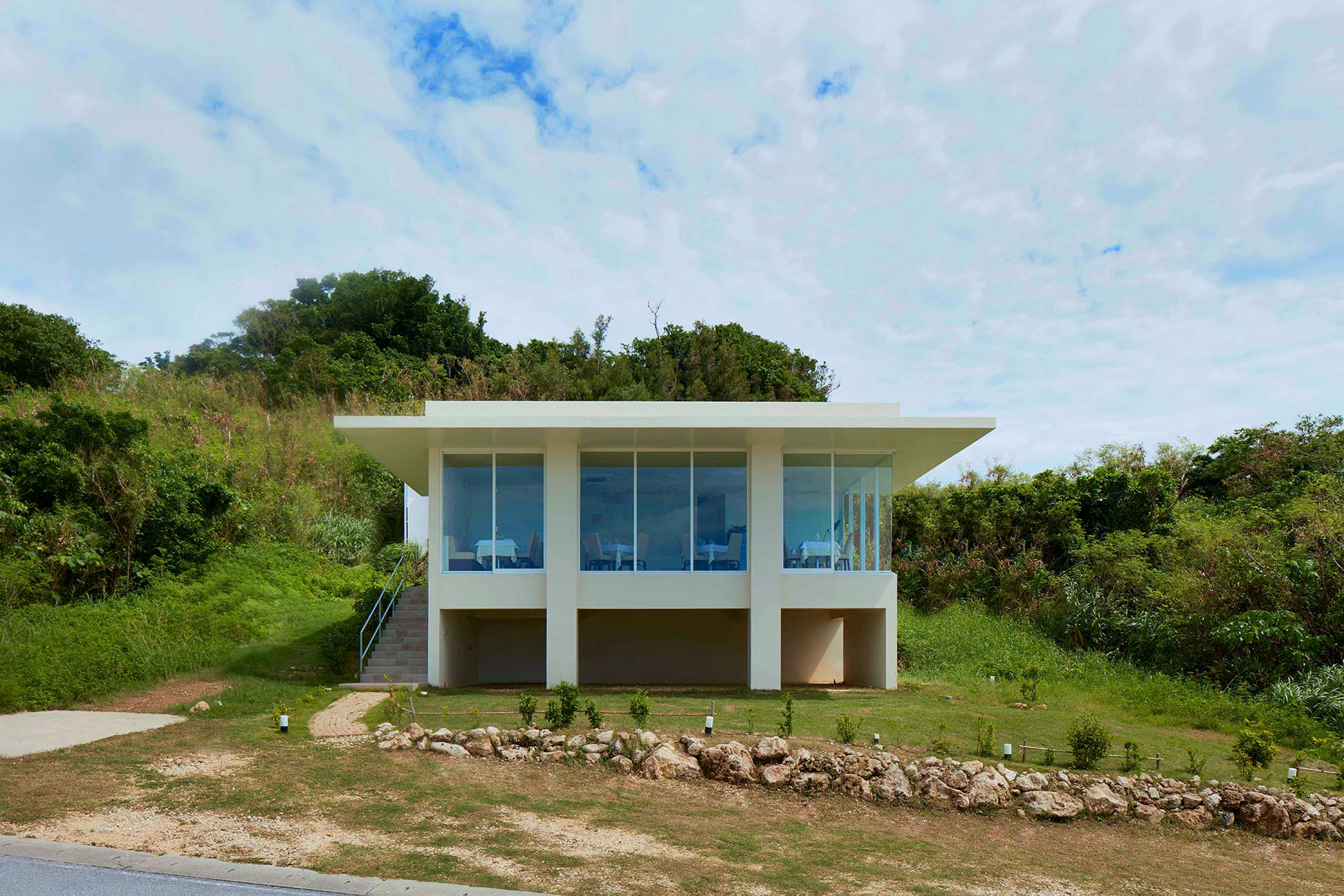
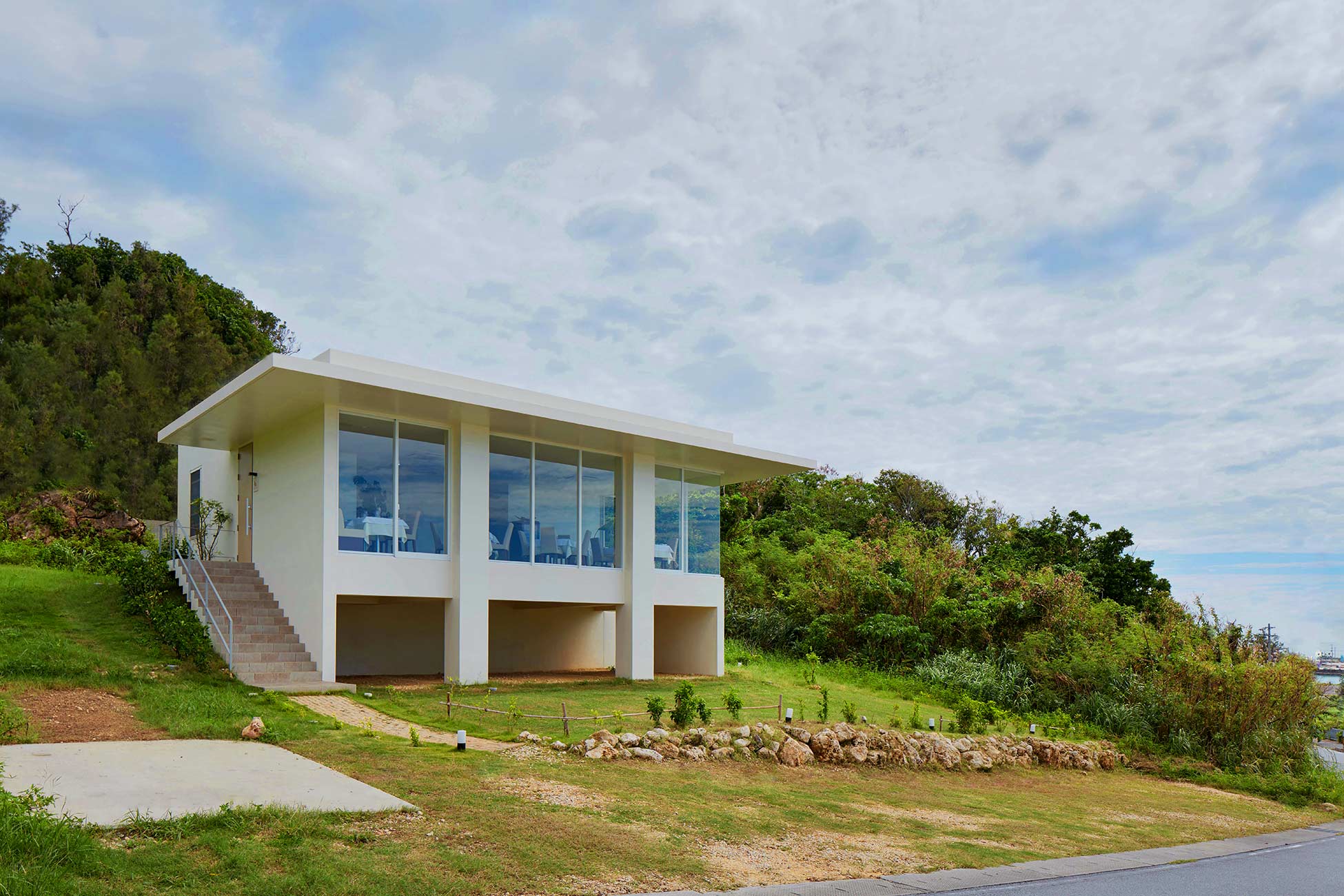
田畑や漁港に近く、海と緑に囲まれた場所に建つフランス料理店「イビスキュス」。
国内外で修行を重ね、ミシュラン星を持つレストランでサブシェフとして活躍したオーナー様が、故郷・沖縄に戻り開いたレストランです。
この建築で主役となるのは、建築ではなく「食」。
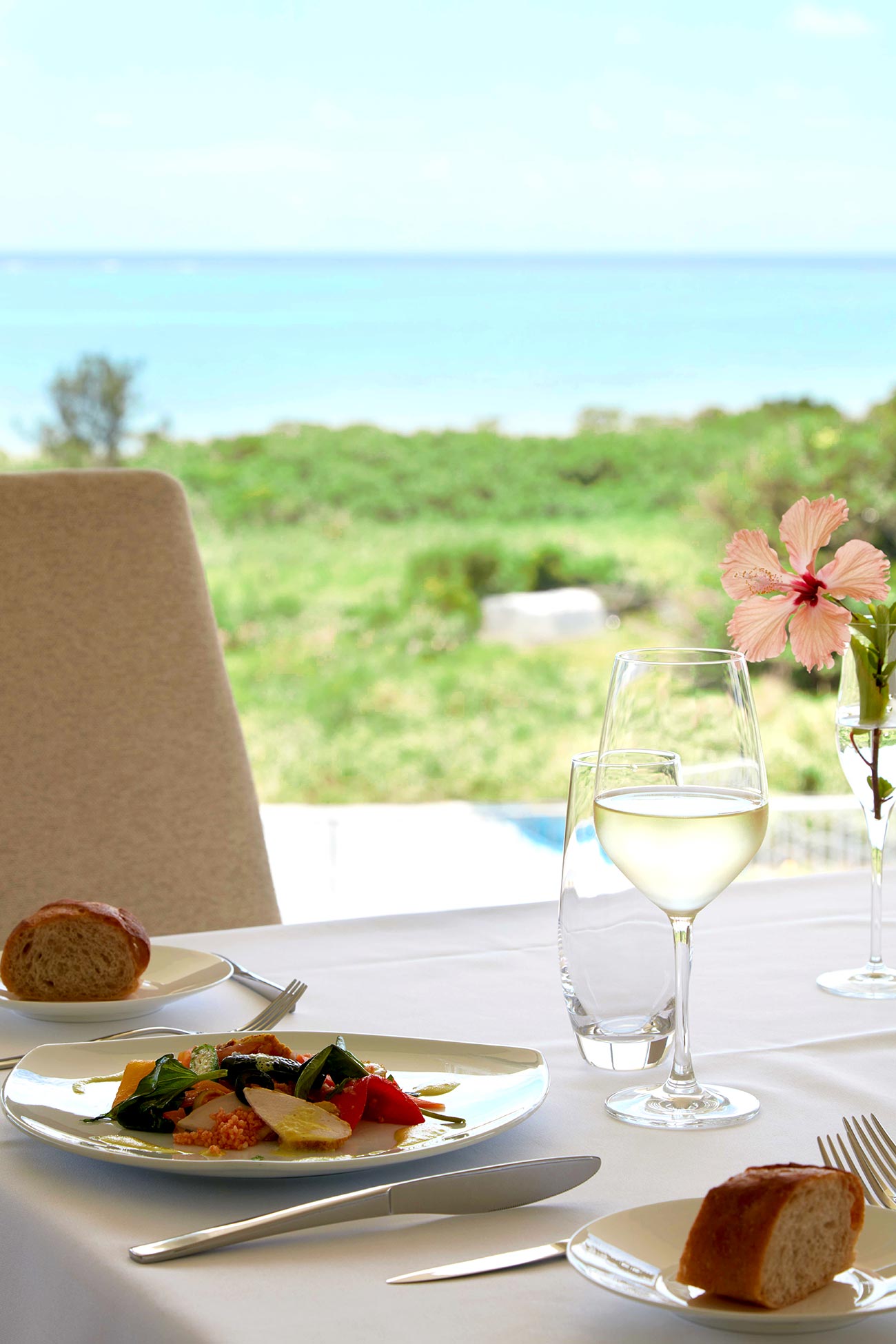
近隣で採れる野菜や果物、魚や肉。その土地の恵みを生かした料理を静かに受け止める、ひとつの「器」としての建築を考えました。
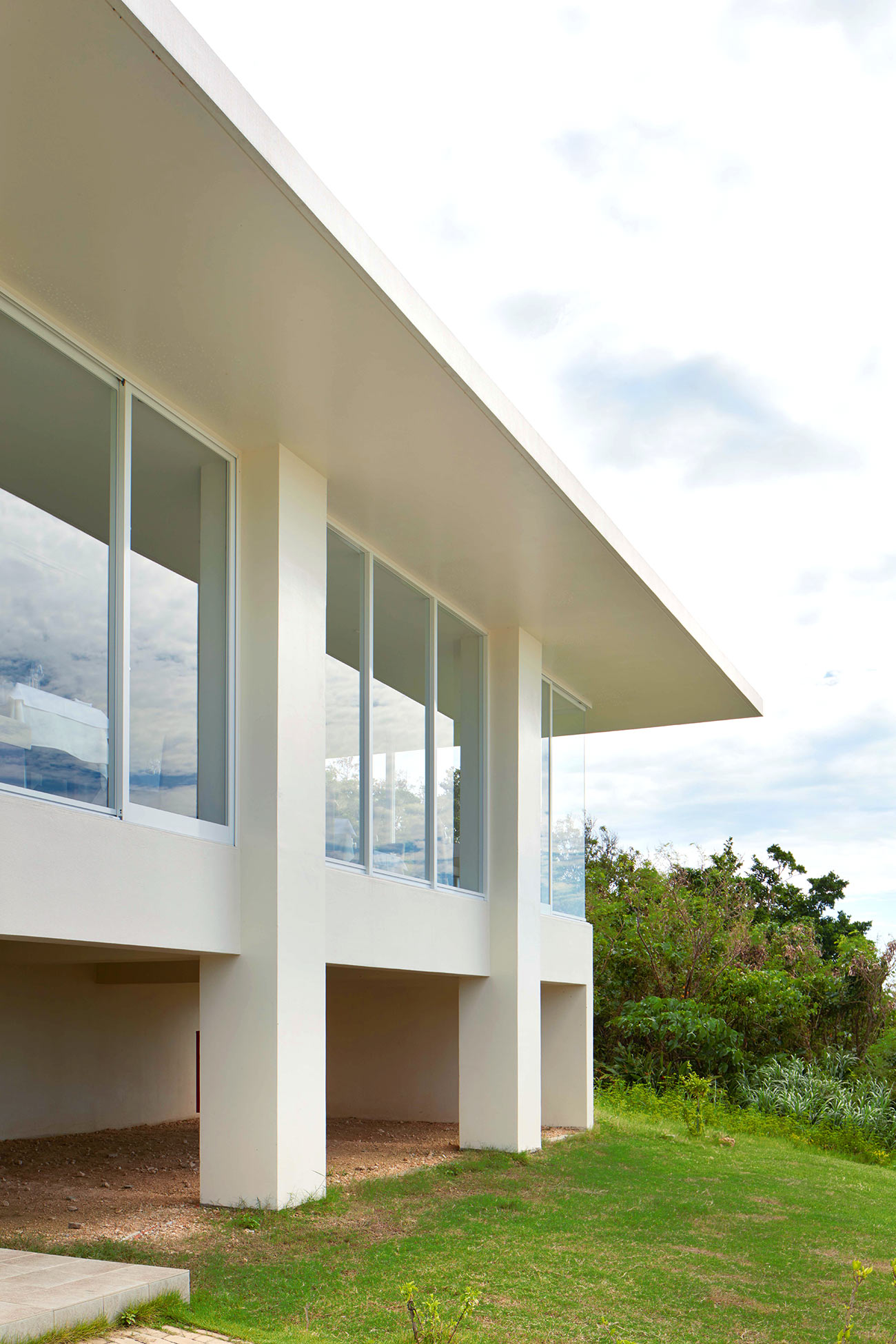
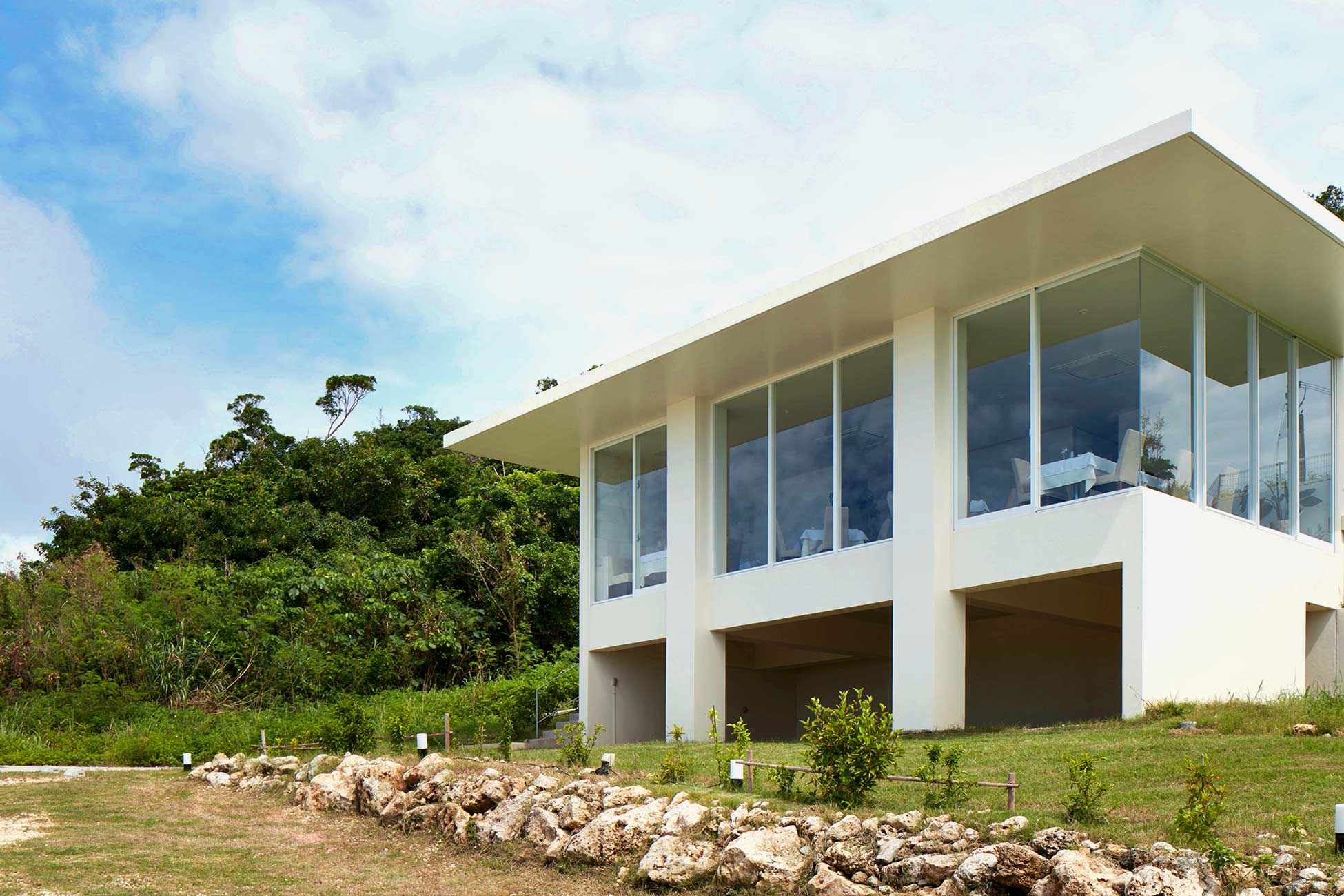
地形を大きく造成したり、過度な外構を加えたりせず、もともとの地形を生かす。
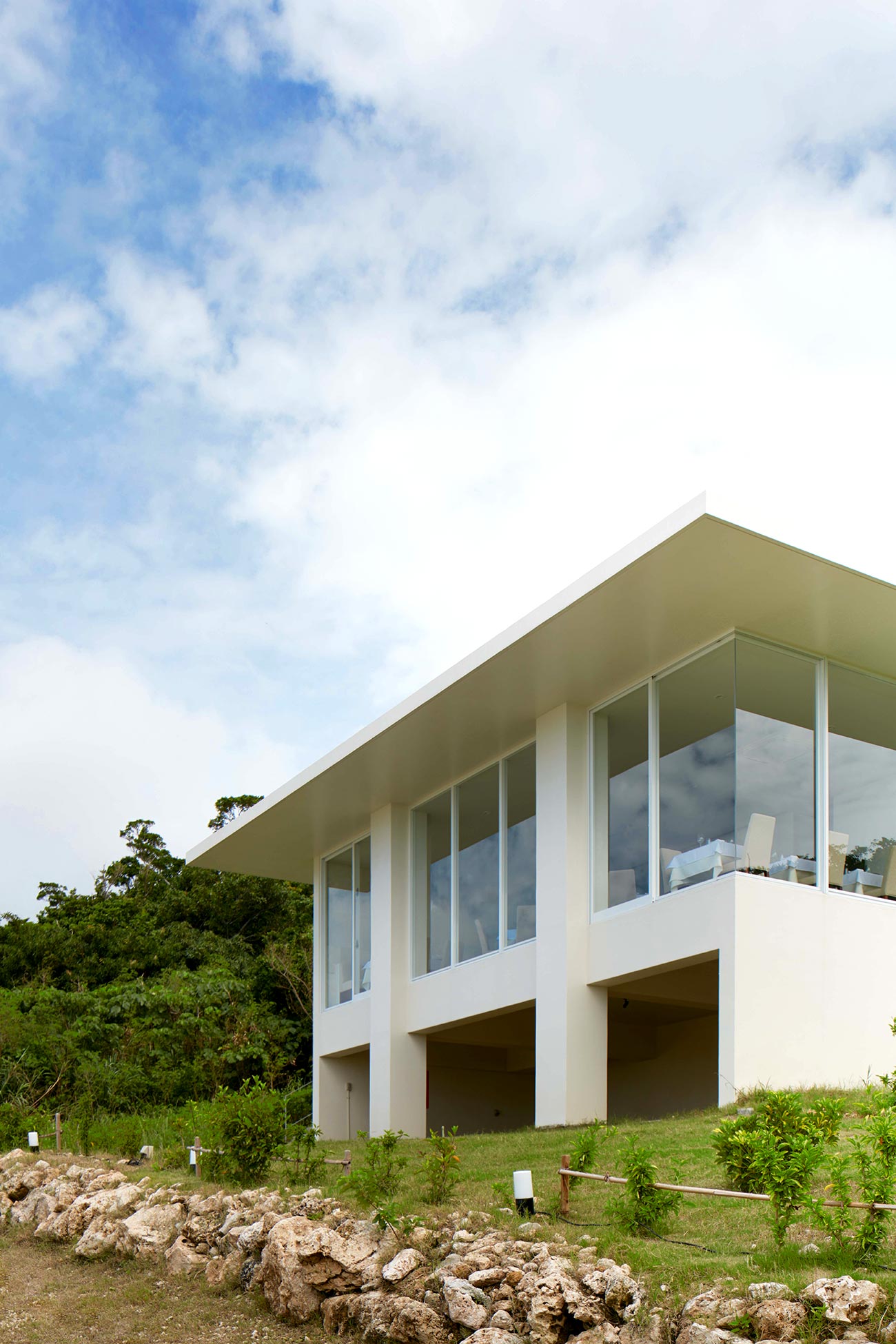
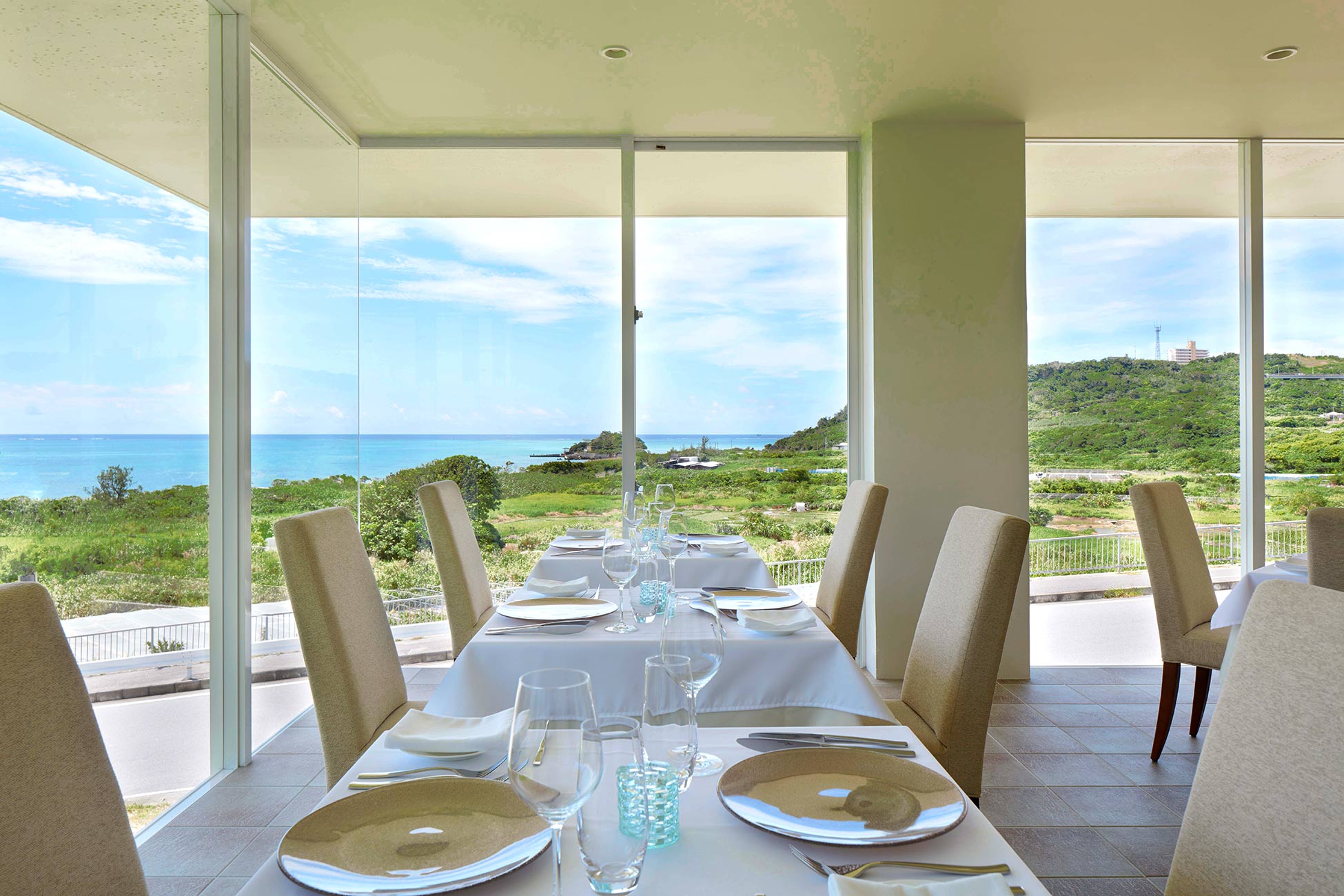
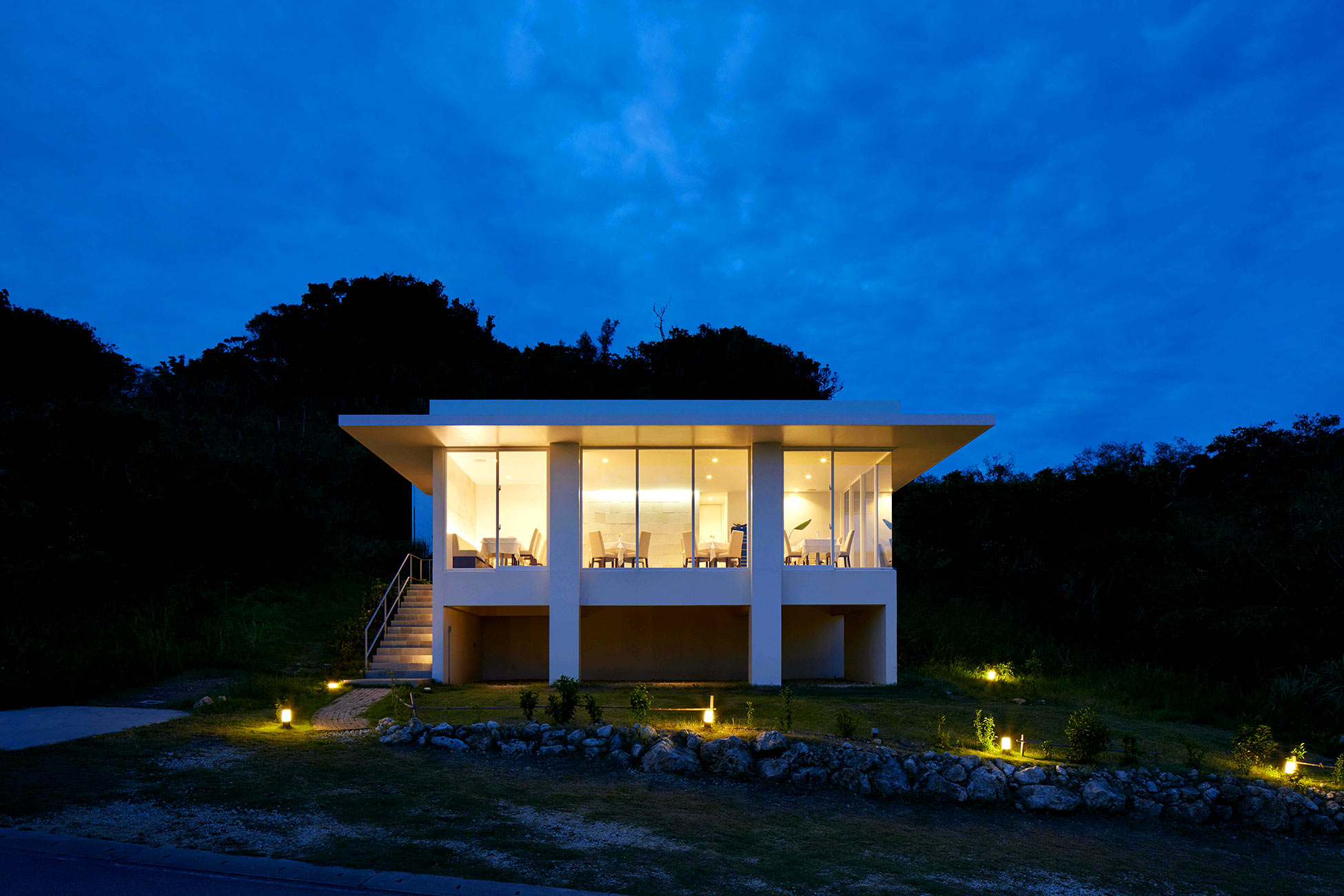
大きなパラソルを広げるように、屋根を伸ばす。
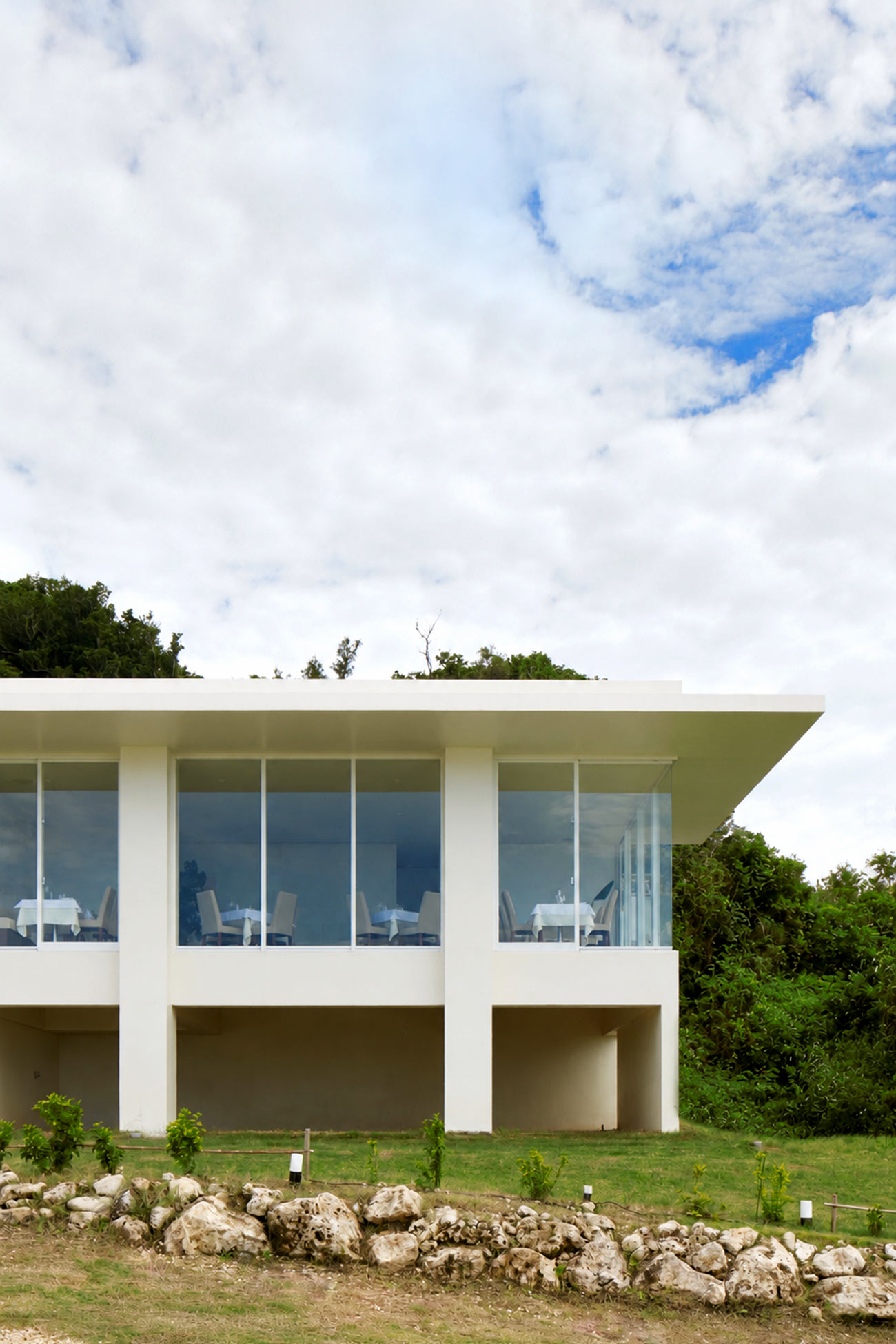
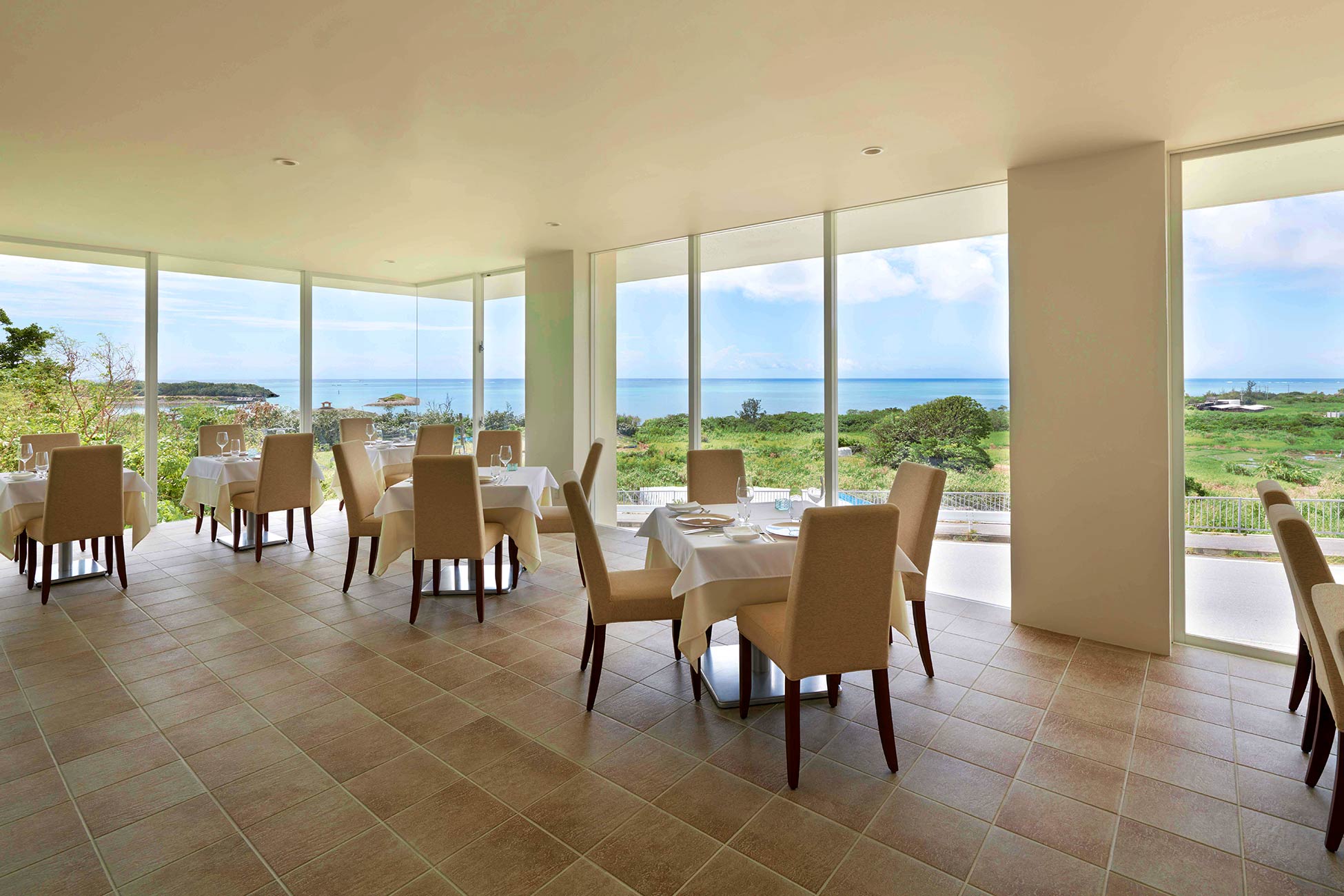
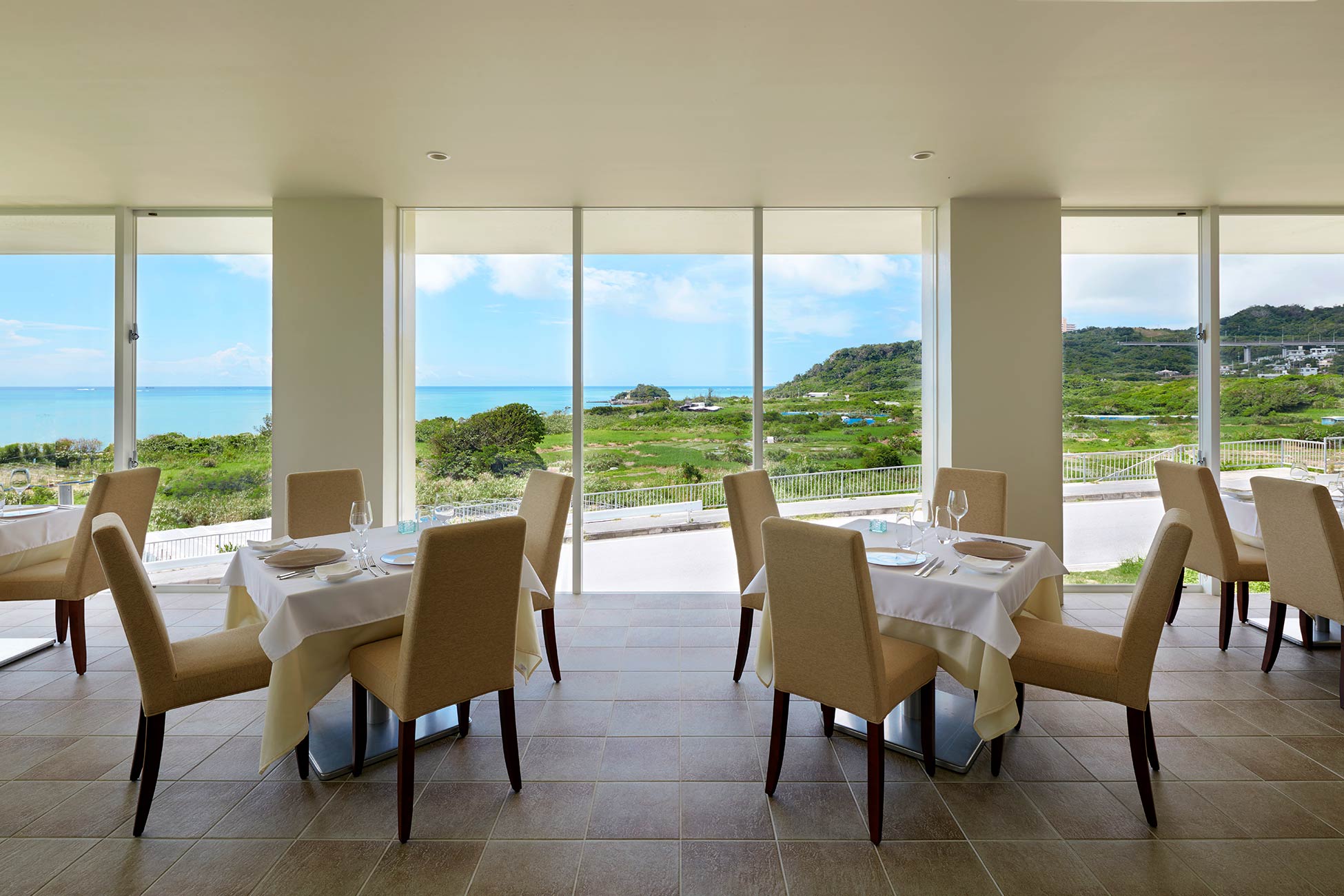
その下に人が集い、食卓を囲む。
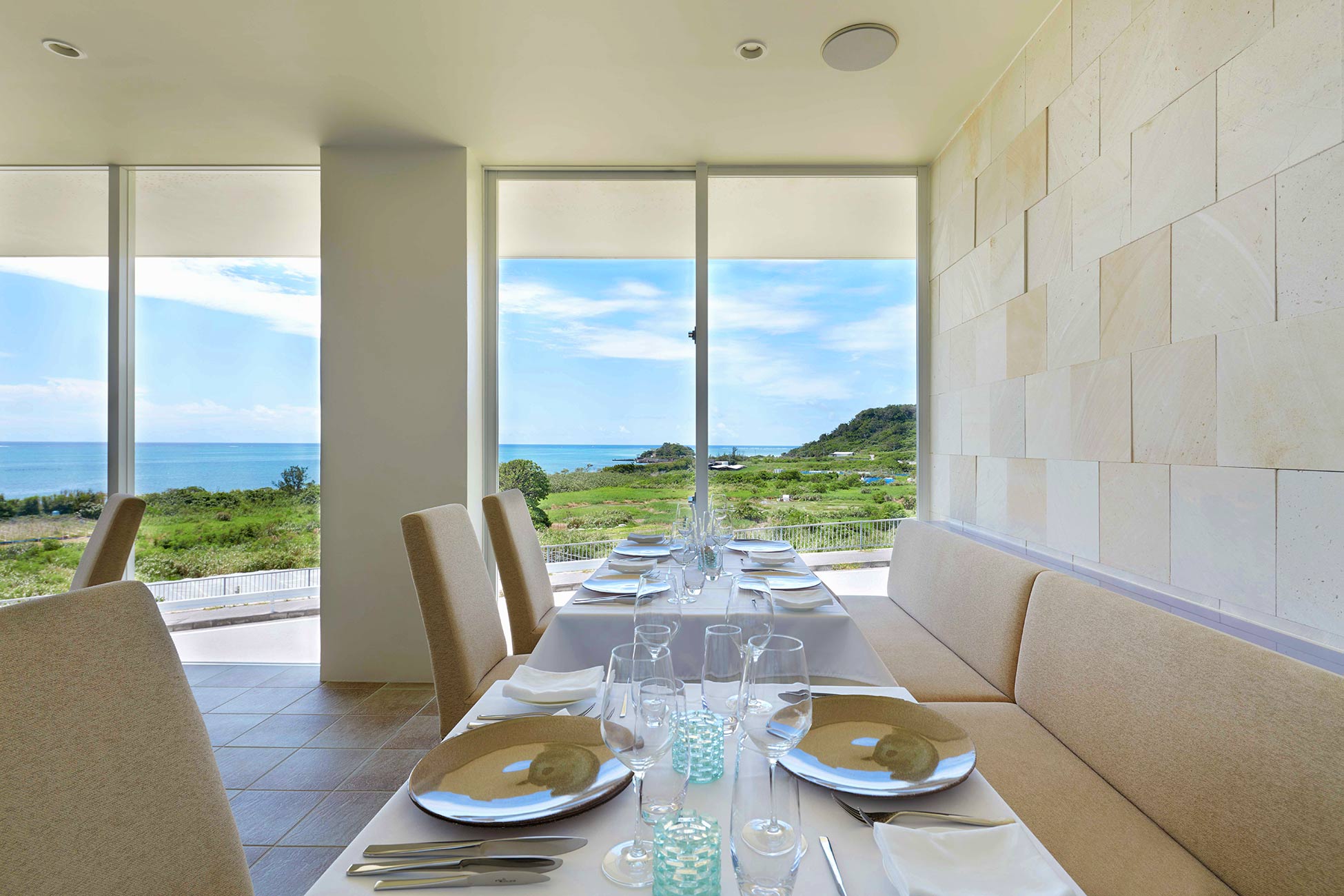
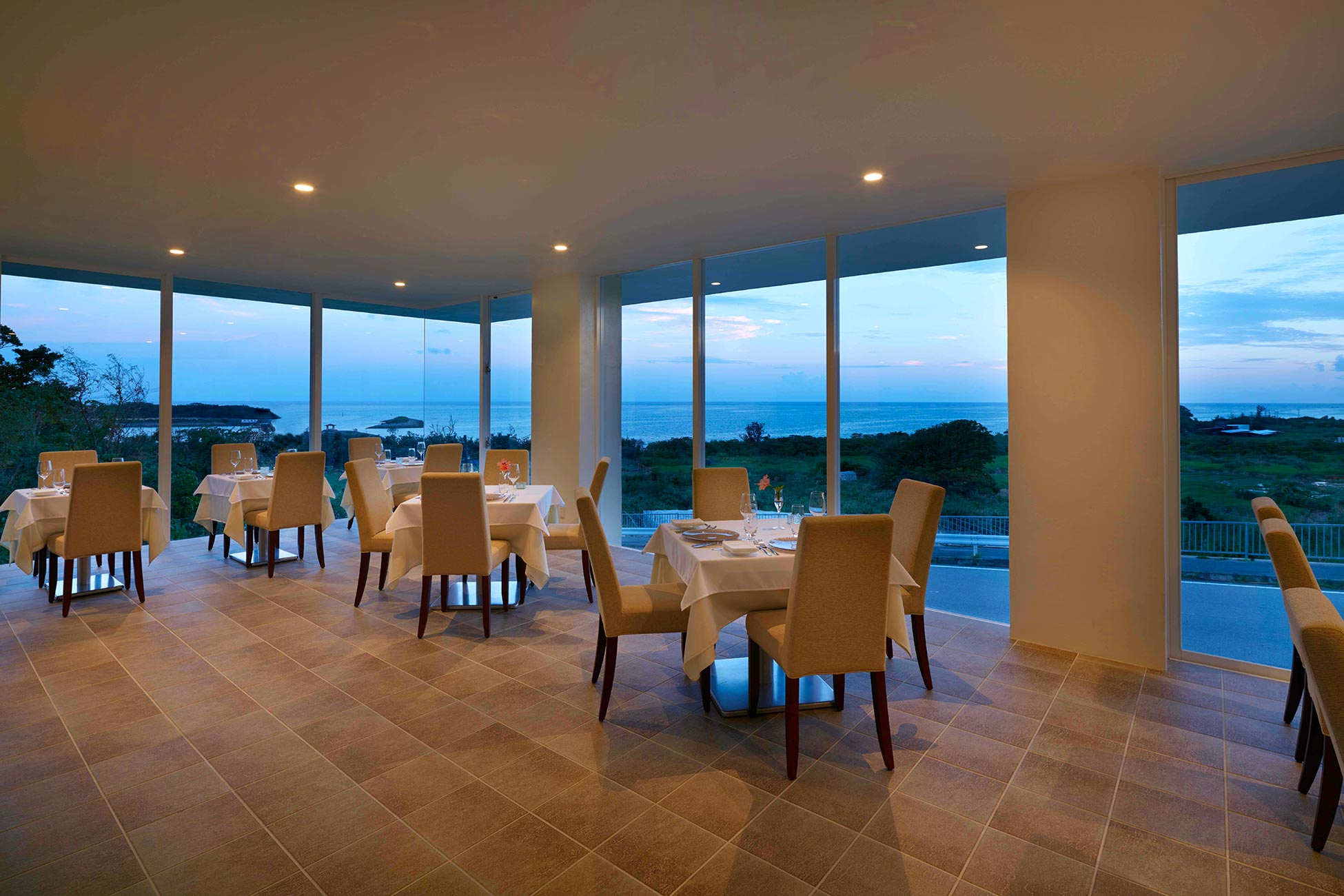
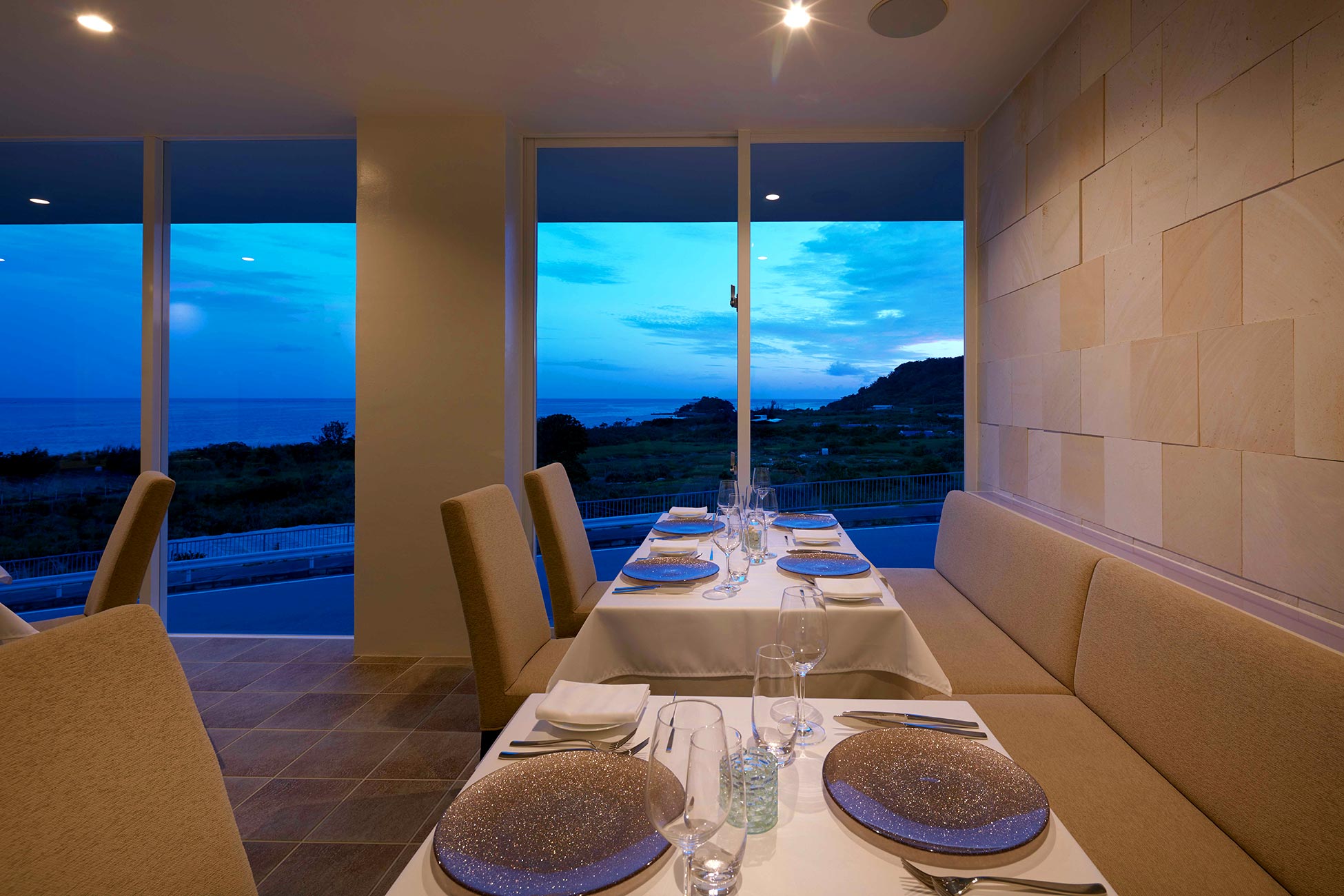
開放的な窓の先には海と緑が広がり、移ろう光や空、時間の変化までもが料理の背景となります。
素材や構成はできる限り抑え、建築そのものを過度に演出しない。
料理が美しく見え、食べる人の感覚が自然と料理へ向かうための余白をつくる。
食、風景、光、風、そして人。本当に大切なものは何気ない日常にある。
建築がそれらを静かにつなぎ、料理の美しさと向き合うための舞台となることを目指ました。
Opening a Parasol — Architecture Where Cuisine Takes Center Stage
Hibiscus is a French restaurant set near fields and fishing ports, surrounded by the sea and greenery of Okinawa.
After training in Japan and abroad and working as a sous-chef at a Michelin-starred restaurant, the owner returned to his native Okinawa to open a restaurant of his own.
Here, architecture is not the protagonist. The cuisine is.
Using vegetables and fruits grown nearby, along with locally sourced fish and meat, the cuisine celebrates the richness of the land. We envisioned the architecture as a quiet vessel that receives and supports the food born from this place.
Rather than extensively reshaping the site or imposing elaborate landscaping, we chose to work with its natural contours.
Like opening a large parasol, the roof extends broadly over the landscape.
Beneath it, people gather around the table.
Beyond the expansive windows, the sea and greenery unfold into view, while shifting light, sky, and the passage of time become part of the backdrop to the cuisine.
Materials and architectural elements are deliberately restrained, allowing the architecture itself to remain quietly in the background.
The space creates a sense of openness in which the food appears at its most beautiful, naturally drawing the senses toward the cuisine.
Food, landscape, light, breeze, and people.
What truly matters can be found in the quiet moments of everyday life.
We sought to create an architecture that gently brings these elements together—a quiet stage for encountering the beauty of cuisine.
イビスキュス 2014
パラソルを広げる。食が主役の建築
田畑や漁港に近く、海と緑に囲まれた場所に建つフランス料理店「イビスキュス」。
国内外で修行を重ね、ミシュラン星を持つレストランでサブシェフとして活躍したオーナー様が、故郷・沖縄に戻り開いたレストランです。
Opening a Parasol — Architecture Where Cuisine Takes Center Stage
Hibiscus is a French restaurant set near fields and fishing ports, surrounded by the sea and greenery of Okinawa.
After training in Japan and abroad and working as a sous-chef at a Michelin-starred restaurant, the owner returned to his native Okinawa to open a restaurant of his own.